
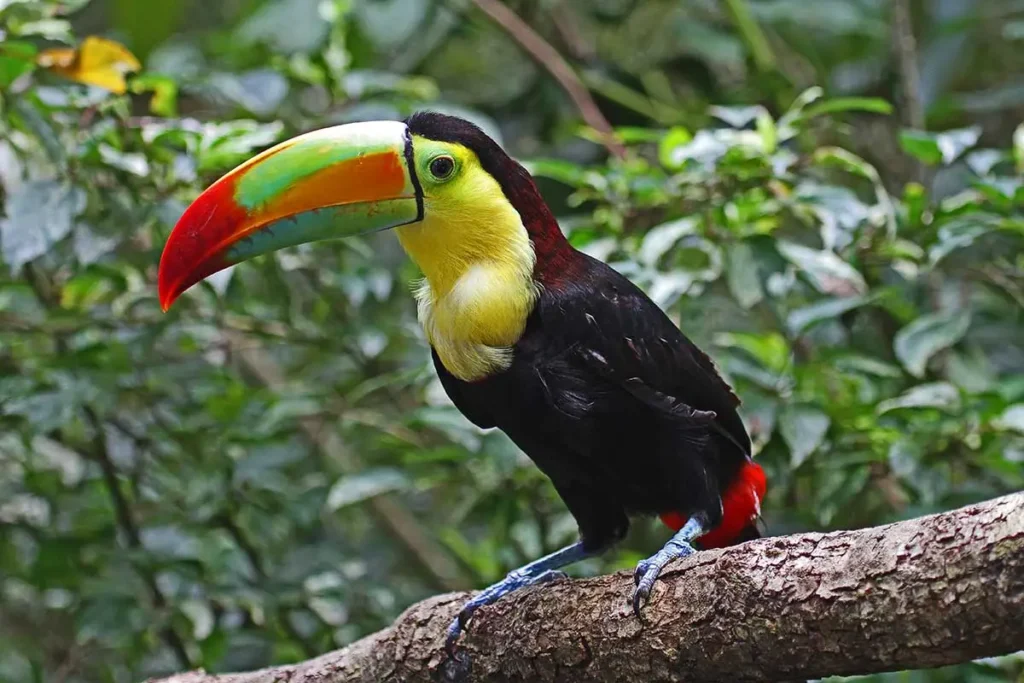
The keel-billed toucan (Ramphastos sulfuratus) is one of the most visually striking birds in the neotropics. Also known as the sulfur-breasted toucan or rainbow-billed toucan, this species is instantly recognizable for its outsized, multicolored bill and bold black-and-yellow plumage. It serves as the national bird of Belize and remains one of the most searched toucan species worldwide.
This guide covers everything you need to know: physical traits with exact measurements, native range and habitat, feeding behavior, social structure, conservation status, and what ownership actually looks like in the countries where it is permitted.
Quick Facts
| Feature | Detail |
|---|---|
| Scientific name | Ramphastos sulfuratus |
| Common names | Keel-billed toucan, sulfur-breasted toucan, rainbow-billed toucan |
| Family | Ramphastidae |
| Size | 42–55 cm (16.5–21.6 in) total length; bill up to 20 cm (7.9 in) |
| Weight | 380–500 g (13.4–17.6 oz) |
| Lifespan | 15–20 years in the wild; up to 25 years in captivity |
| Native range | Southern Mexico, Belize, Guatemala, Honduras, Colombia, Venezuela |
| IUCN status | Near Threatened (assessed 2021) |
| National bird of | Belize |
| Good pet? | Conditional (legal and logistical barriers are significant) |
Appearance
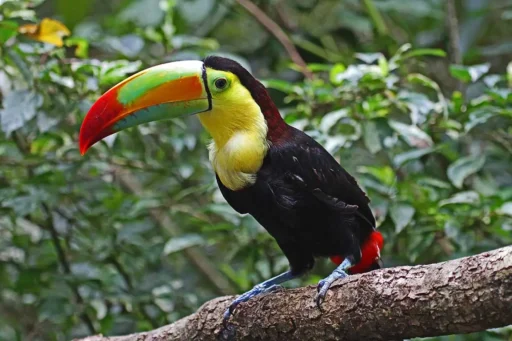
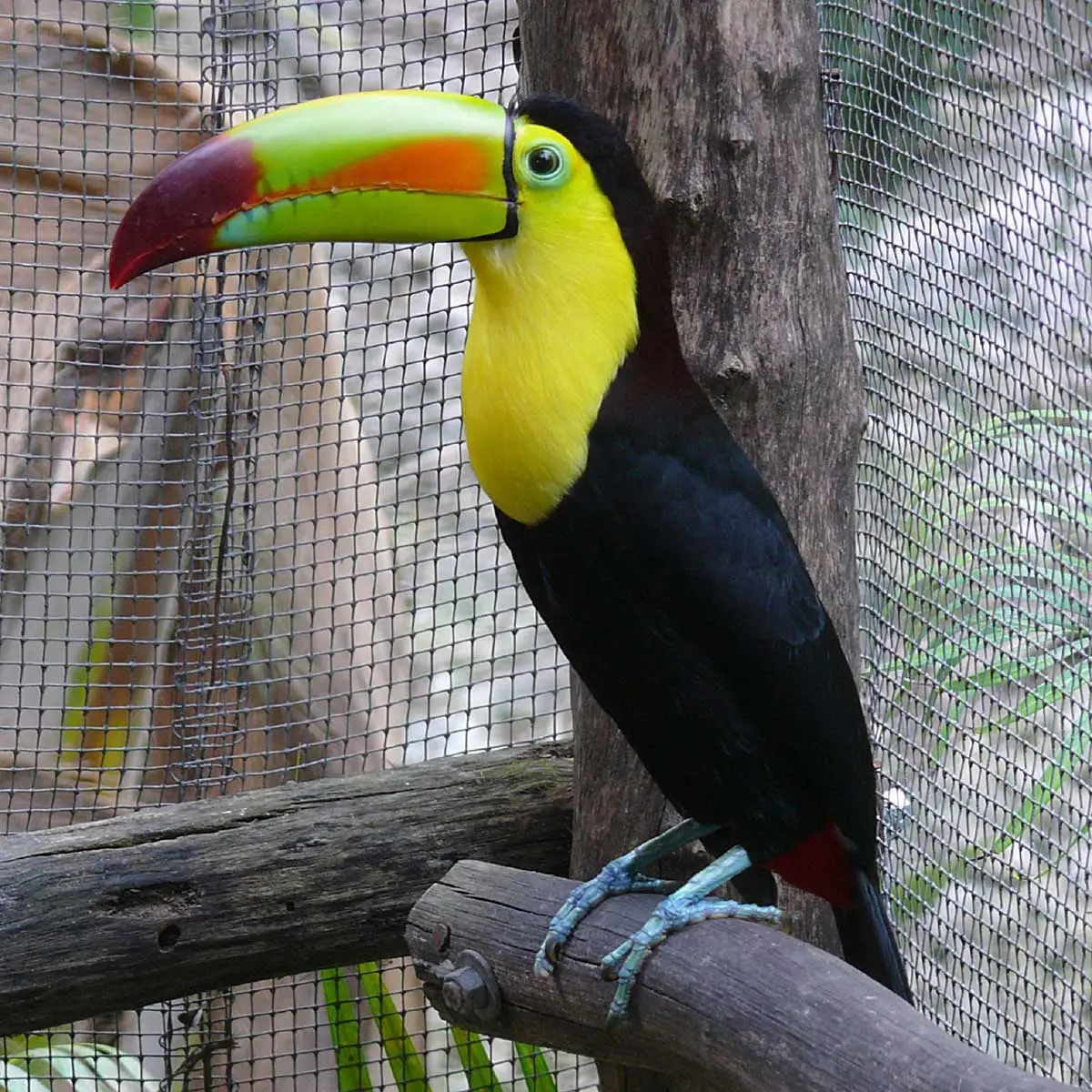
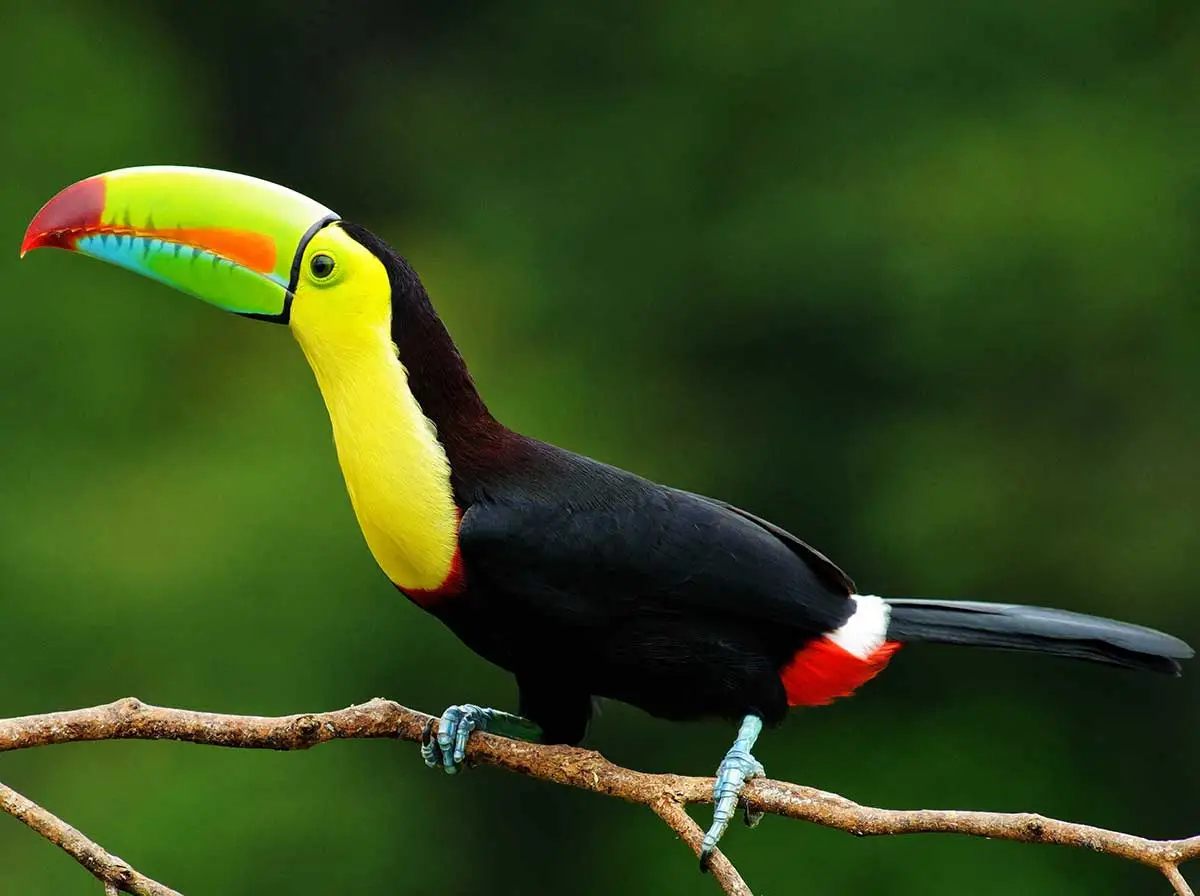
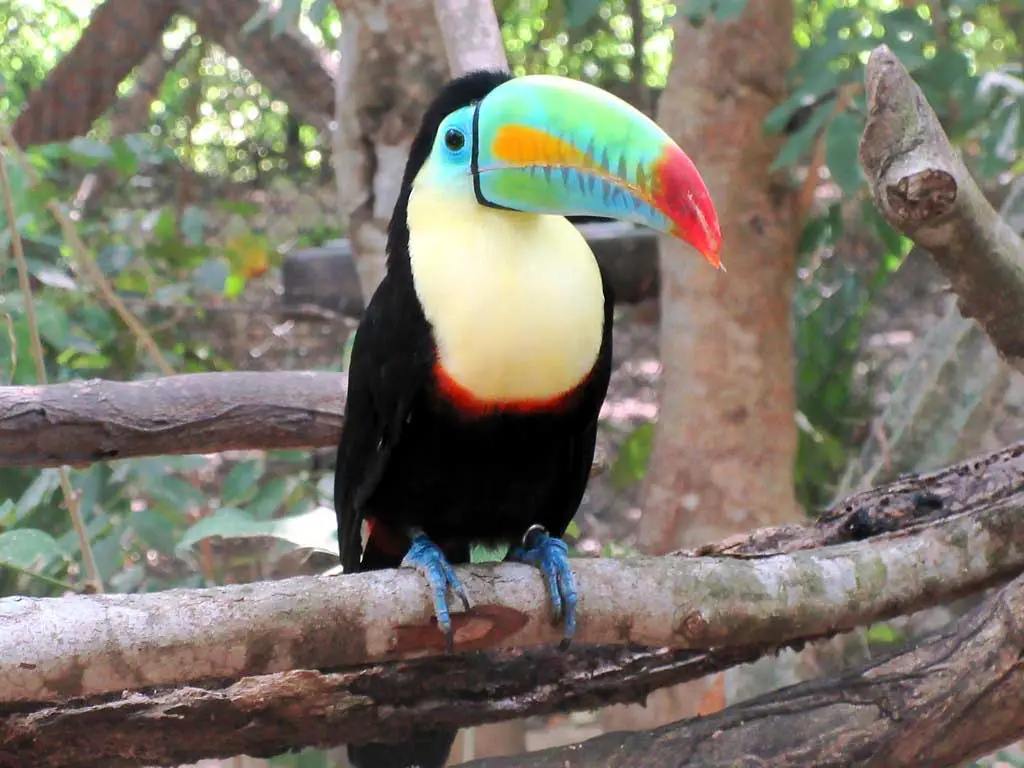
The body plumage of the keel-billed toucan is predominantly glossy black, with a vivid sulfur-yellow chest and throat that gives the species one of its common names. A small red patch sits just above the tail, and the bare skin surrounding the eyes is bright turquoise-blue. The feet are zygodactyl (two toes forward, two backward) and display a blue-and-orange coloration.
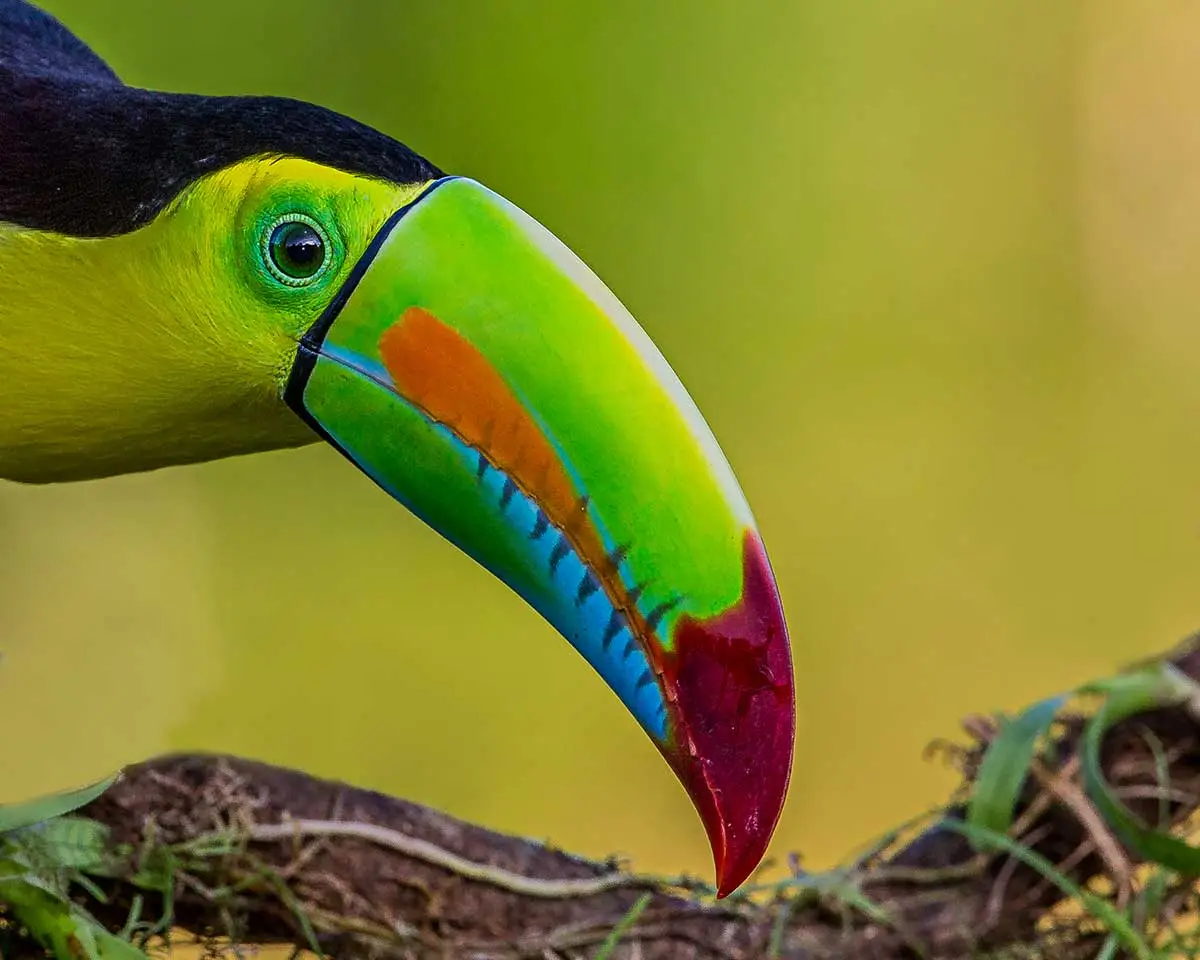
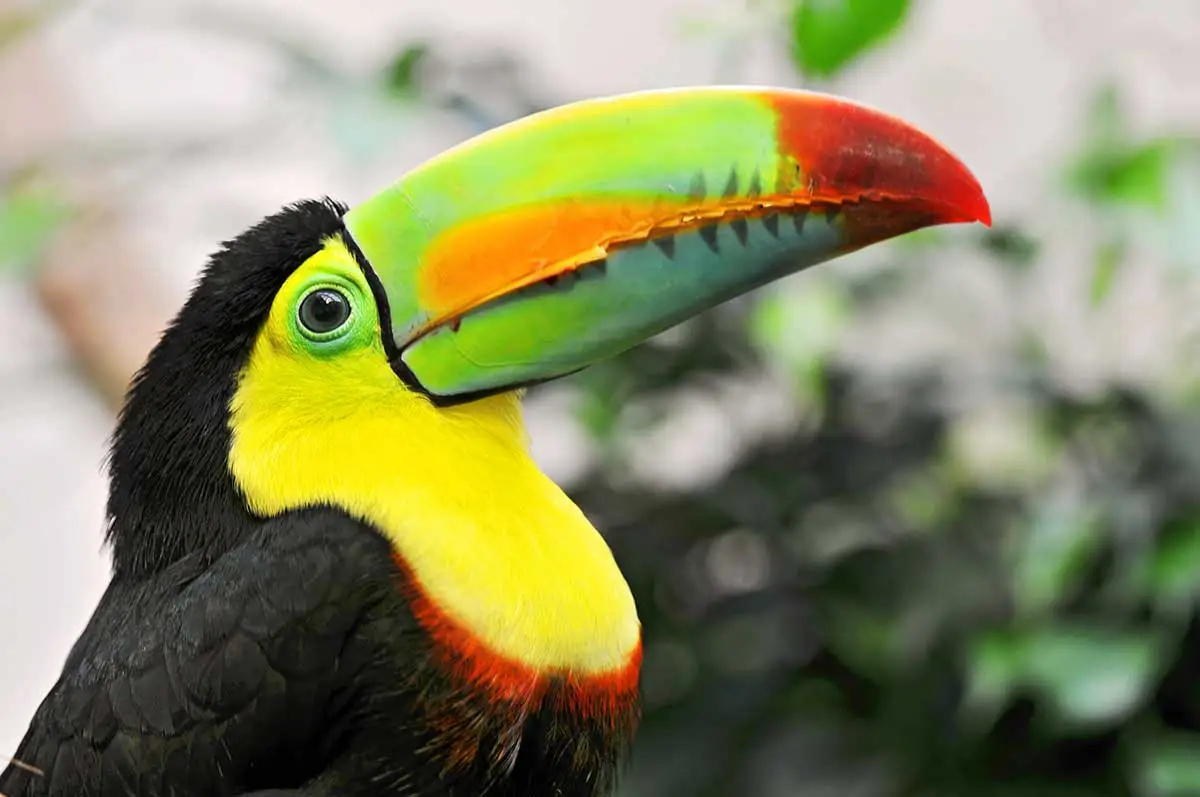
The bill is the defining feature. It measures up to 20 cm and accounts for roughly one-third of total body length, yet it weighs very little because its internal structure is a hollow matrix of bone covered in keratin (the same protein that forms human nails and hair). The surface color is a mosaic of green along the upper ridge, orange and red along the sides, and a blue tip. No two bills are identical in pattern intensity.
The tongue is long and narrow (up to 14 cm), feather-like in texture, and lined with fine filaments that help manipulate food. Despite the bill’s dramatic appearance, the wingspan is relatively short for the bird’s body size, producing a characteristic flap-and-glide flight pattern with rapid wingbeats.
Habitat and Distribution
The keel-billed toucan is native to lowland tropical and subtropical forests from southern Mexico (Veracruz, Oaxaca, Chiapas) through Central America (Belize, Guatemala, Honduras, Nicaragua, Costa Rica, Panama) and into northwestern South America (Colombia, western Venezuela). The species reaches its highest densities in Belize, where it enjoys legal protection as the national bird.
It occupies the forest canopy and forest edge at elevations generally below 1,900 m (6,200 ft). Primary lowland rainforest is the preferred habitat, though the species adapts readily to forest margins, secondary growth, and areas with scattered large fruiting trees. It nests almost exclusively in natural tree cavities or those excavated by woodpeckers, and competition for nest sites is a meaningful ecological pressure.
Keel-billed toucans are non-migratory but make local movements in response to fruit availability across their range.
Diet and Feeding Behavior
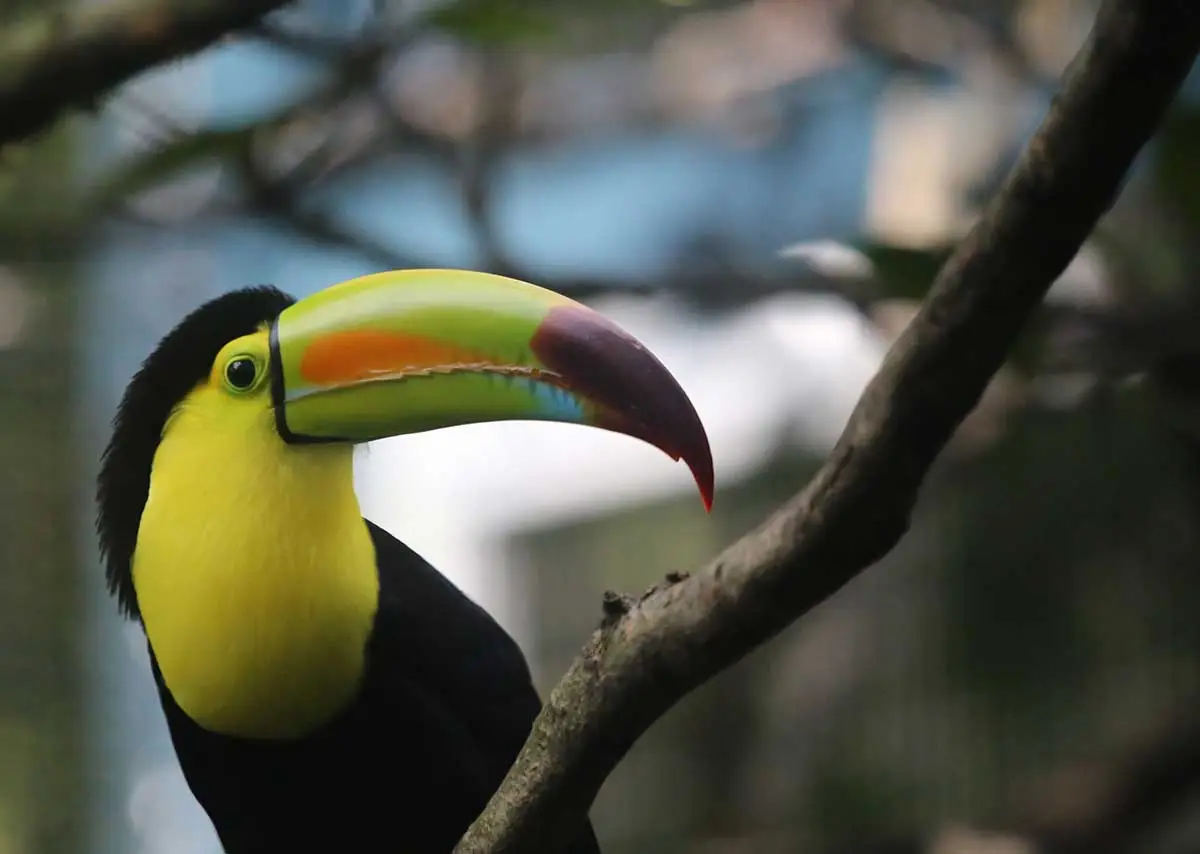
Fruit makes up the bulk of the diet (roughly 75–80% by frequency of observations). Favored items include figs, wild berries, palm fruits, and various forest fruits that ripen at different times, giving the toucan a reliable year-round food source if the forest is intact. The long bill allows access to fruit at branch tips that smaller birds cannot reach.
The remaining diet is opportunistic: insects (especially during the breeding season when protein demand rises), lizards, small frogs, and occasionally the eggs or nestlings of smaller cavity-nesting birds. Toucans swallow small fruit whole, then regurgitate the seeds, making them important long-distance seed dispersers for many tropical tree species.
A distinctive feeding behavior is to toss food into the air and catch it at the back of the throat, a technique linked to the tongue’s limited flexibility. This behavior is especially visible with round fruits in captive birds.
Behavior and Social Structure
Keel-billed toucans are gregarious, typically moving in groups of 6–12 individuals outside of the breeding season. These flocks roost communally in tree cavities, sometimes with multiple birds fitting into a single hole by folding their bill back over the tail to reduce body volume. This bill-tucking posture is well documented and frequently photographed.
Vocalizations are varied: the most common call is a repetitive, croaking “krreek-krreek” that carries well through dense forest and serves for group cohesion and territory advertisement. Birds also produce bill-clattering sounds during social interactions and courtship.
Bill size and coloration appear to play a role in species recognition and mate selection. Researchers have also documented that the bill functions as a thermoregulator: blood flow to the bill surface is actively modulated to release excess body heat, similar to the ear mechanism in elephants.
Reproduction and Nesting
The breeding season in most of the range falls between February and June. Pairs form monogamous bonds and jointly select a tree cavity, often returning to the same site in successive years. Both sexes participate in enlarging the cavity if needed, though they lack the bill strength to excavate fresh wood and depend on pre-existing rot or woodpecker work.
The female lays 2–4 glossy white eggs. Both parents share incubation duties, with shifts typically lasting 30–75 minutes. Incubation takes 15–20 days. Chicks hatch altricial (naked, eyes closed, helpless) and develop slowly: they open their eyes around day 25 and are not fledged until 6–8 weeks after hatching. During this period both parents feed them, initially on regurgitated fruit pulp and later on increasingly solid items including insects.
Juveniles have duller plumage and a less colorful bill for the first year. Full adult coloration develops by 18–24 months.
Keel-Billed Toucan as a Pet
Toucans are kept as pets in some countries, and the keel-billed toucan attracts significant interest given its charismatic appearance. However, the practical and legal barriers are substantial, and this species is not appropriate for most households.
Space requirements: Toucans need very large enclosures. A minimum indoor-outdoor aviary of at least 3 m x 3 m x 2 m is generally recommended by avian specialists, though larger is strongly preferred. Standard parrot cages are completely unsuitable. The birds are active, require flight space, and become stereotypic and destructive in confined quarters.
Diet in captivity: A captive keel-billed toucan requires a low-iron fruit-based diet. This is not trivial: toucans are highly susceptible to hemochromatosis (iron storage disease), a condition that causes progressive organ damage and is almost always fatal if not managed. High-iron fruits (grapes, raisins, dark berries) must be avoided. The standard captive diet consists of low-iron commercial toucan pellets combined with fresh papaya, banana, melon, mango, and blueberries in controlled quantities. Consultation with an avian veterinarian experienced with ramphastids is essential before acquiring a bird. Regular blood panels to monitor serum ferritin and iron are a recurring cost of ownership.
Enrichment and toys: Toucans are intelligent and curious. They benefit from foraging toys, hanging fruit puzzles, and varied perch diameters that mimic canopy structure. Unlike parrots, they do not chew wood, but they will investigate and occasionally destroy soft materials.
Price range: Captive-bred keel-billed toucans from licensed breeders in the United States typically sell for $8,000–$15,000 USD. The cost reflects the difficulty of breeding them in captivity and the regulatory overhead on the breeder’s side. Prices in the UK and EU are broadly similar when available, which is rare.
Veterinary access: Finding an avian vet with direct experience treating toucans (not just parrots) is genuinely difficult outside major metropolitan areas. This is a serious practical consideration before committing to ownership. Exotic bird insurance that covers avian specialty care is available in the US and UK and should be budgeted as an ongoing expense.
Legal Considerations
Ramphastos sulfuratus is listed under CITES Appendix II, meaning international trade is controlled and requires documentation, but the species is not banned outright for commercial trade. What this means in practice varies significantly by country.
United States: Legal to own in most states, provided the bird originates from a licensed captive breeder and is accompanied by CITES documentation. No federal ban, but several states (California, Hawaii, New Jersey, and others) impose additional restrictions or full bans on exotic bird ownership. Always verify your specific state and county regulations before purchase. Birds must never be wild-caught imports.
United Kingdom: Ownership of CITES Appendix II species is permitted with appropriate Article 10 certificates issued by the Animal and Plant Health Agency (APHA). Buying from a licensed UK breeder simplifies the paperwork substantially. Post-Brexit, the UK now operates its own CITES permit system separate from the EU.
European Union: Covered under EU Wildlife Trade Regulations. Appendix II species can be kept legally with valid CITES permits. Rules vary by member state on breeder licensing; Germany and the Netherlands, for example, have additional national-level requirements.
Belize: As the national bird, the keel-billed toucan has additional symbolic and legal protections within Belize. Export of wild specimens is prohibited.
If you are researching a purchase and need guidance on the correct CITES documentation or avian import permits, consult an exotic pet legal assistance specialist familiar with wildlife trade law in your jurisdiction. Getting this wrong can result in confiscation of the bird and significant fines.
Conservation Status
The IUCN Red List classifies the keel-billed toucan as Near Threatened (updated 2021), a downgrade from its previous Least Concern status. The population trend is declining. The principal threats are:
- Deforestation: Conversion of lowland forest for agriculture and cattle ranching, particularly in Mexico, Guatemala, and Colombia, is the dominant pressure. Toucans require large intact forest patches to maintain viable group territories.
- Illegal pet trade: Wild-caught birds continue to enter trade despite CITES protections. This is particularly problematic in parts of Mexico and Colombia where enforcement is inconsistent.
- Hunting: The species is hunted for food and feathers in some areas of its range.
- Hemochromatosis in rescue birds: Wild birds brought into rehabilitation after habitat loss or capture stress frequently present with iron overload, complicating conservation efforts.
BirdLife International and regional partners are active in monitoring population trends and supporting habitat protection in key strongholds such as Belize and the Darien in Panama.
Role in the Ecosystem
As a frugivore that swallows fruit whole and disperses seeds across large distances, the keel-billed toucan contributes materially to forest regeneration. Studies of seed rain in intact Mesoamerican forests show that large-billed frugivores like toucans are responsible for dispersing tree species whose seeds are too large for smaller birds to ingest. This makes the species functionally important for maintaining forest composition and diversity, not merely an aesthetic presence.
The toucan also functions as a nest predator of small cavity-nesting birds, which puts it in a dual ecological role: seed disperser and predatory pressure on passerine populations. Both roles become disrupted when toucan populations decline due to habitat fragmentation.
Frequently Asked Questions
What does a keel-billed toucan eat?
The keel-billed toucan’s primary diet is tropical fruit (approximately 75–80% of intake), including figs, palm fruits, and wild berries. It supplements this with insects, small lizards, frogs, and occasionally eggs or nestlings from smaller bird species, particularly during breeding season when protein needs increase.
How long do keel-billed toucans live?
In the wild, keel-billed toucans typically live 15–20 years. In well-managed captive environments with appropriate diet and avian veterinary care, lifespans of up to 25 years have been documented. Diet quality (especially iron management) is the single biggest variable in captive longevity.
Is the keel-billed toucan legal to keep as a pet in the US?
Yes, in most US states, provided the bird is captive-bred and comes with valid CITES documentation. It is not a federally prohibited species, but individual state laws vary. California, Hawaii, and several other states restrict or ban ownership. Always verify your state’s regulations and work only with licensed exotic bird breeders.
Why is the keel-billed toucan the national bird of Belize?
The keel-billed toucan was designated Belize’s national bird in 1981 at independence. Its presence across the country’s lowland forests and its distinctive multicolored bill made it a strong symbol of Belizean biodiversity and natural heritage. Within Belize, the species receives additional legal protections as a result of this status.
How big does a keel-billed toucan get?
Adult keel-billed toucans measure 42–55 cm (16.5–21.6 in) in total body length, with the bill alone reaching up to 20 cm (7.9 in). They weigh between 380 and 500 g (13.4–17.6 oz). Despite the dramatic bill size, the bird is medium-weight because the bill’s internal bone structure is largely hollow.
What is the difference between a toucan bird and a keel-billed toucan?
“Toucan” refers to the entire family Ramphastidae, which includes about 40 species across genera such as Ramphastos, Pteroglossus (aracaris), and Aulacorhynchus (toucanets). The keel-billed toucan is one specific species within this family, distinguished by its multicolored bill and the yellow chest. When people casually say “toucan bird,” they are often picturing this species specifically.
Explore More Toucan Species
The keel-billed toucan is the most recognized member of a diverse family. If this species caught your interest, explore the other toucans covered on this site:
- Emerald Toucanet (a smaller, green-plumaged relative found in highland forests)
- Guianan Toucanet (a compact toucanet from South American lowland forests)
- All Toucan Species on The Exotic Birds