
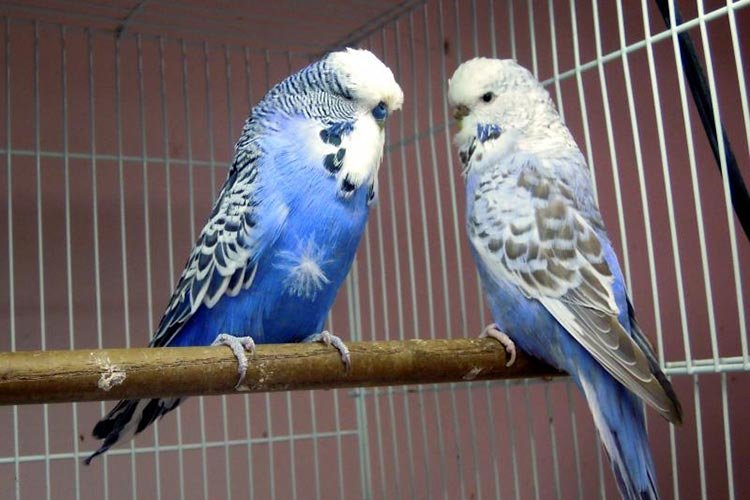
The English budgie is the show-quality counterpart of the wild budgerigar — larger, calmer, and visually striking in a way that makes it a favorite at aviculture exhibitions worldwide. If you are researching budgies as pets or simply want to understand what separates this variety from the common parakeet, this guide covers everything: physical characteristics, behavior, diet, housing, health, and what owning one actually involves.
Quick facts
| Scientific name | Melopsittacus undulatus (selectively bred variety) |
|---|---|
| Also known as | English parakeet, show budgerigar, exhibition budgie |
| Size | 21–23 cm (8.5–9 in) |
| Weight | 50–65 g |
| Lifespan | 5–8 years (up to 10 in optimal conditions) |
| Native range | Captive-bred; wild ancestor native to Australia |
| IUCN status | Least Concern (wild Melopsittacus undulatus) |
| Good pet? | Conditional — gentle and low-noise, but requires an experienced keeper |
Origin and history
The English budgie is not a separate species — it is a selectively bred form of the Australian parakeet (Melopsittacus undulatus), developed over more than five decades by British aviculturists working toward a defined exhibition standard. The process began in earnest in the late 19th century, when competitive bird shows in the United Kingdom started rewarding birds with a heavier build, a fuller head, and more elaborate feathering than anything found in the wild population.
The breed reached its modern standard roughly around the 1980s, after generations of careful pairings aimed at exaggerating size, feather mass, and the distinctive forehead profile that judges now look for. The Budgerigar Society in the UK has maintained the official show standard since 1925, and today the exhibition budgerigar is recognized globally as a distinct type — even though it shares the same scientific name as its wild relative.
Appearance
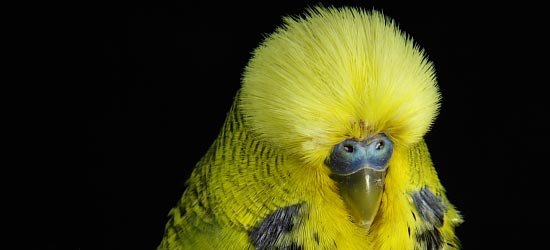
The most immediately recognizable feature of the English budgie is its size. At 21–23 cm, it is roughly 30–40% larger than a standard American parakeet, and that extra mass is distributed in ways that make it look dramatically different: a rounded, bulbous forehead that slopes forward well beyond the beak, a wide and full chest, and heavy feathering that gives the bird an almost fluffy silhouette when perched.
The plumage patterns follow the same genetic rules as all budgerigars. The classic wild-type coloring features a yellow face with a black-spotted throat, dark-blue cheek patches, and green-yellow body feathers with black barring across the wings and mantle. However, selective breeding has produced an enormous range of color mutations — including whites, blues, cobalts, mauves, cinnamons, spangles, and lutinos — meaning that the yellow bird in the image above is just one of dozens of recognized varieties.
One important distinction: birds with excessive crest development or unusually dense head feathering are sometimes marketed as English budgies, but these are considered departures from the standard show type. A true exhibition-quality English budgie has smooth (not crested) plumage on the head, with the emphasis on size and deportment rather than novelty feathering.
Behavior and personality
Compared to the active, quick-moving American parakeet, the English budgie has a noticeably calmer temperament. This is partly a consequence of its heavier build — it simply moves more slowly and with less agitation — and partly a result of decades of selecting for birds that perform well under the handling and judging conditions of an exhibition hall.
In a home environment, this translates into a bird that is generally quiet, tolerant of proximity, and less likely to be startled by sudden movements or sounds. English budgies are social animals that do well in pairs or small groups, and a single bird will require more deliberate human interaction to avoid boredom. They are capable of mimicking words and whistles, though they are typically less vocal and less prolific talkers than the standard parakeet.
One behavioral consideration worth noting: because the English budgie was bred for exhibition rather than for pet characteristics, individual birds vary considerably in how comfortable they are with handling. Some hand-raised birds become genuinely tame; others remain reluctant to step up or interact closely. Sourcing from a breeder who prioritizes temperament alongside show quality makes a real difference here.
English budgie as a pet
The English budgie can be a rewarding pet for someone who understands what it is — an exhibition bird that has been adapted to life in captivity, not a breed optimized for tricks and close interaction. That context shapes what you should expect.
Housing
Given its larger size, the English budgie needs more space than a standard parakeet. A minimum cage size of 60 cm wide × 40 cm deep × 60 cm tall (roughly 24 × 16 × 24 in) is the starting point for a single bird, but larger is always better. Horizontal bar spacing of 1.2–1.6 cm is appropriate — wide enough for a comfortable grip, narrow enough to prevent head entrapment. Perches of varying diameters (1–2 cm) help maintain foot health and prevent pressure sores, which this heavier bird is more susceptible to than its lighter relatives.
Foraging toys, shreddable materials, and ladders are all useful enrichment items for a bird spending time in a cage. If you are setting up for the first time, a cage designed for cockatiels (a similarly sized bird) is often a practical benchmark.
Diet
A seed-only diet is inadequate for long-term health. The English budgie does well on a varied diet that includes a base of high-quality budgerigar pellets or a mixed seed blend (canary seed, millet, safflower), supplemented with fresh vegetables (leafy greens, carrot, courgette), small amounts of fruit, and occasional sprouted seeds. Sprouted seeds are nutritionally denser than dry seeds and are well accepted by most birds.
Foods to avoid include avocado, onion, garlic, chocolate, and anything high in salt or sugar. Fresh water should be changed daily. A cuttlebone or mineral block provides calcium and helps maintain beak condition — particularly relevant for a bird with the heavy beak structure common in exhibition budgies.
Health considerations
The English budgie’s selective breeding comes with some health trade-offs. The enlarged head and heavy feathering can predispose these birds to respiratory issues, and the breed is generally considered less robust than the wild-type budgerigar. The most common health concerns include:
- Megabacteria (avian gastric yeast): a fungal infection of the digestive tract that is disproportionately common in budgerigars and can cause weight loss and vomiting.
- Psittacosis: a bacterial infection transmissible to humans; regular avian vet checkups help detect it early.
- Feather cysts: more common in heavily feathered lines; they appear as lumps under the skin where feathers fail to emerge properly.
- Obesity: a real risk in inactive birds on seed-heavy diets; the heavier build of the English budgie makes weight management more important than with standard parakeets.
Annual checkups with an avian veterinarian (a specialist in birds, not a general-practice vet) are strongly recommended. Finding a qualified avian vet before you acquire the bird is a practical step that many first-time owners skip and later regret.
Breeding
Breeding exhibition-quality English budgies is a specialist pursuit. Because the breed has no reliable visual sexual dimorphism in some color mutations, confirming the sex of a potential breeding pair often requires DNA testing. Even with correctly sexed birds, producing offspring that meet show standards consistently requires knowledge of color genetics, line breeding principles, and the specific traits that judges assess.
Clutches typically contain 4–6 eggs, with an incubation period of around 18 days. Chicks fledge at approximately 30–35 days. For anyone interested in exhibition breeding, connecting with a local Budgerigar Society chapter provides both mentorship and access to birds with verified lineage — which matters considerably when selecting breeding stock.
Conservation status
The English budgie is a captive-bred variety with no wild population of its own. Its wild ancestor, Melopsittacus undulatus, is assessed as Least Concern by the IUCN Red List, with a large and stable population across Australia’s interior. The wild budgerigar faces no significant conservation threats at present, though habitat changes in arid Australia are monitored as a long-term consideration.
Because the English budgie is a domestically bred form with no wild-capture component, it carries no CITES restrictions, and no special permits are required to own, breed, or sell it in the US, UK, or EU. This is one of the few aspects of exotic bird ownership that is straightforward from a legal standpoint.
Frequently asked questions
What is the difference between an English budgie and a regular budgie?
The English budgie is significantly larger (21–23 cm vs. roughly 15–18 cm for the standard American parakeet), has a more rounded and prominent forehead, heavier feathering, and a calmer temperament. Both are the same species (Melopsittacus undulatus), but the English type has been selectively bred for over a century to meet exhibition standards.
Are English budgies good pets for beginners?
They can be, with caveats. English budgies are calmer and quieter than standard parakeets, which suits apartment living. However, their specific housing needs, health sensitivities, and variable tameness mean that someone with prior bird experience will have a much easier time. First-time owners are better served by buying from a breeder who hand-raises their birds.
How long do English budgies live?
Typically 5–8 years, with well-cared-for individuals occasionally reaching 10 years. This is somewhat shorter than the wild-type budgerigar (which can live 10–15 years in captivity), a difference generally attributed to the health trade-offs associated with intensive selective breeding.
How much does an English budgie cost?
Prices vary considerably depending on color mutation and show quality. A pet-quality English budgie from a reputable breeder typically costs between $50 and $150 USD. Exhibition-quality birds from champion lines can cost $200–$500 or more. Avoid very cheap birds sold without breeder documentation, as these are often mislabeled standard parakeets or birds from poor genetic stock.
Do English budgies talk?
They are capable of mimicking words and short phrases, but they are generally less talkative than standard American parakeets. Hand-raised males that receive consistent vocal interaction from a young age have the best chance of developing a meaningful vocabulary. Don’t buy an English budgie primarily for its talking ability.
Explore more budgerigar species
The English budgie is one of several fascinating varieties in the budgerigar family. If you want to compare it with related species, these pages are a good starting point:
- Australian parakeet — the wild ancestor that the English budgie was developed from, and a useful reference for understanding the differences in size and temperament.
- Bourke’s parakeet — another gentle, exhibition-friendly parakeet species that shares several care requirements with the English budgie.
- All budgerigar species — the full budgerigar category on The Exotic Birds.